
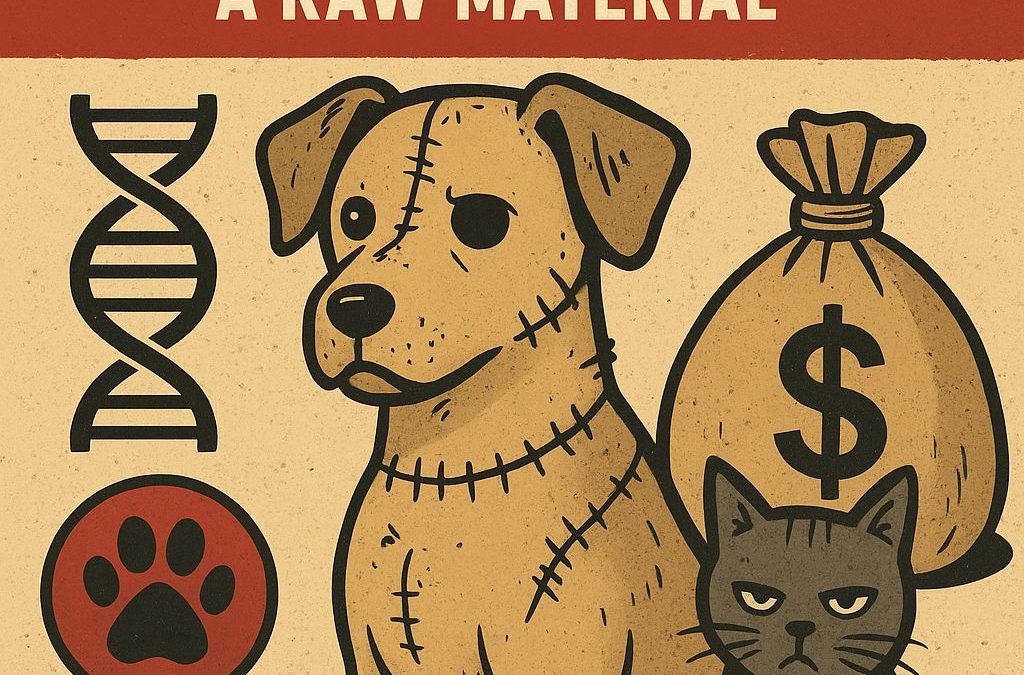
Behind the tenderness, the wellness rhetoric and the Instagram reels lies a far more powerful engine: a rapidly expanding market built on premium nutrition, insurance, veterinary services, lifestyle branding, and more controversially, genetic selection and aesthetic engineering.
The meme-dog, the influencer-cat, the “designer breed,” and, increasingly, the possibility of direct genome editing are reshaping an entire economic sector. The companion animal is no longer simply part of the household: it has become an asset, carrying returns (monetary and cultural) and risks (health, legal, reputational, and ethical).
Growth, Data, and Market Transformation
The global pet-care industry surpassed USD 200 billion in 2024, and it is shifting decisively from volume to value: premium food, booming veterinary services and insurance, tele-veterinary platforms, and personalised digital services. This mix attracts capital: biotech start-ups, diagnostics companies, and investors view the sector as a high-margin, resilient consumer market.
North America remains the demand leader, but Europe and Asia are accelerating fast. Urbanisation, loneliness as a structural demographic trend, and the democratisation of pet ownership fuel sustained appetite for “emotional products” and sophisticated care.
The market is now segmented into three pillars: health (diagnostics, treatments, genetics), lifestyle (premium nutrition, accessories), and digital services (telemedicine, wearable tech, behavioural tracking).
**Why “Manufacture” Animals?
Desire, Social Capital, and the Economics of Appearance**
The appetite for aesthetically coded animals (flat-faced dogs, miniature breeds, unusual coats) goes far beyond whim. It reflects a complex mix of identity, belonging, social signalling, and digital culture.
A single viral post can turn a dog into a monetisable icon, instantly increasing market demand. Breeders respond by selecting, intensifying, or industrialising traits that perform well online. The predictable consequence: standardisation of looks and the amplification of genetically fragile features.
Animal Health: Alarming Trends and Real Costs
The impact is measurable and severe.
Brachycephalic breeds (French bulldogs, pugs and other flat-faced dogs) suffer from chronic respiratory disorders (BOAS), dermatological issues, heat intolerance, and repeat veterinary interventions. Shelters and NGOs report a sharp rise in abandonment and medical surrenders linked to these breeds.
Another myth collapses: the widely held belief that “designer breeds” are inherently healthier. Large-scale UK and international studies now show that crossbreeds marketed as “healthier” generally do not perform better on the most common hereditary pathologies. Ultimately, health is driven by breeding practices, testing, and proper oversight, not by fashionable genetics.
Biotechnology: Promise, Temptation, and Risk
The CRISPR revolution has reached the animal world. Genome-editing tools can target specific disease-causing mutations, improve research models, and, at least in theory, modify aesthetic traits such as colour or size.
Scientific and veterinary communities insist on a distinction:
- Therapeutic uses may prevent suffering and save lives.
- Aesthetic uses raise profound ethical concerns: off-target effects, heritability, long-term unpredictability, and above all the impossibility of consent.
The line between care and commodification is thin, and increasingly contested.
Regulation: Europe Moves, the World Watches
In response to rising concerns, the EU has begun constructing a significant legislative framework.
Between 2023 and 2025, the European Parliament advanced texts strengthening traceability, enforcing health standards, and tackling illegal breeding and imports. The trajectory is clear: more transparency, stricter obligations, and the possibility for Member States to ban practices deemed harmful.
However, rules for the genetic editing of companion animals remain incomplete. Clarification is needed for:
- bans on non-therapeutic genetic modification;
- criteria for medically justified interventions;
- cross-border enforcement.
ESG Implications and Investor Risk
Companion-animal economics now form part of ESG risk mapping:
S – Social
Welfare standards, abandonment, overbreeding, and systemic veterinary costs.
G – Governance
Traceability, compliance, responsible sourcing, and data transparency.
E – Environmental
Supply-chain impacts (feed, transport, waste).
Companies linked to intensive or non-therapeutic breeding face growing reputational and regulatory risks likely triggers for disinvestment.
Conversely, actors offering credible diagnostics, responsible breeding, validated therapeutic technologies, and robust insurance models present a defensible profile for ESG-driven portfolios.
Three Plausible Scenarios (3-year horizon)
1. Central Scenario
EU regulatory tightening, steady value-driven growth, cautious adoption of gene-editing for medical use, and a bifurcation between responsible health-oriented firms and contested luxury offerings.
2. Risk Scenario
Following scandals and public outcry, targeted bans on certain crosses and on aesthetic genetic editing; consolidation among compliant players.
3. Disruptive Scenario
Normalisation of genetic tools for severe hereditary corrections; emergence of a regulated market for veterinary gene therapies, with steep barriers to entry and intensified ethical debate.
Conclusions: A Reasoned Surprise
1. Animals now function as a form of social and financial raw material. Aesthetic traits have monetisable value, and can distort the wellbeing of the living beings who carry them.
2. Technology does not confer moral legitimacy. CRISPR offers therapeutic promise, but it does not justify the pursuit of aesthetic perfection.
3. Effective public policy means evidence and targeting, not technological prohibition.
The EU is moving toward standards based on traceability and demonstrable medical benefit.
4. The unexpected truth: Designer crossbreeds are not inherently healthier. The decisive variables are breeding quality, health testing, and regulatory governance not genetic fashion.
Practical Recommendations
For Regulators
Harmonise EU traceability; require reproducible health tests for high-risk lines; ban aesthetic genome editing; strengthen cross-border enforcement.
For Investors
Prioritise actors with transparent practices, validated diagnostics, and responsible breeding; integrate welfare metrics into due diligence processes.
For Media and NGOs
Communicate clearly on true veterinary costs, abandonment rates, and scientific evidence to shift consumer preferences toward responsible choices.
Post-scriptum
The pet market has become an unconventional raw material where human desire, science and capital converge. The challenge for the next five years will be to reconcile innovation with moral responsibility. It is as much a political question as an economic one.
Sources
- Euromonitor International, Pet humanisation and premium products drive global pet care sales up by 5.9% to USD 197.6 billion.
- PetfoodIndustry, Global pet care market at US$ 200 billion in 2024; Cats rising.
- RSPCA, Health guide for brachycephalic (“flat-faced”) dogs.
- Royal Veterinary College (RVC) / Brachycephalic Working Group, Critique of the use of flat-faced breeds in breeding and advertising.
- UK Brachycephalic Working Group (BWG), Position on the welfare of brachycephalic dogs.
- UFAW (Universities Federation for Animal Welfare), Resources on genetic issues in companion animals.
- INRAE, Ethical and scientific recommendations on genome editing in animals.
- Frontiers in Genome Editing, “How genome editing changed the world of large animal research.”
- Frontiers in Genome Editing, Editorial “Insights in genome editing in animals 2023/2024”.
- MDPI, Article “CRISPR-Cas9 in the tailoring of genetically engineered animals.”
- Frontiers in Animal Science, Review on CRISPR/Cas9, mosaicism, welfare and use in large animals.
- Frontiers in Sustainable Food Systems, Systematic review “Using animal history to inform current debates in gene editing farm animals.”
Important Disclaimer: The content of this article is provided for informational and educational purposes only. It reflects the author’s opinion based on information available at the time of publication, which may become outdated. This content does not constitute personalized investment advice, a recommendation to buy or sell, and does not guarantee future performance. Markets carry a risk of capital loss. The investor is solely responsible for their decisions and should consult an independent professional advisor before any transaction. The publisher disclaims all liability for decisions made based on this information.