
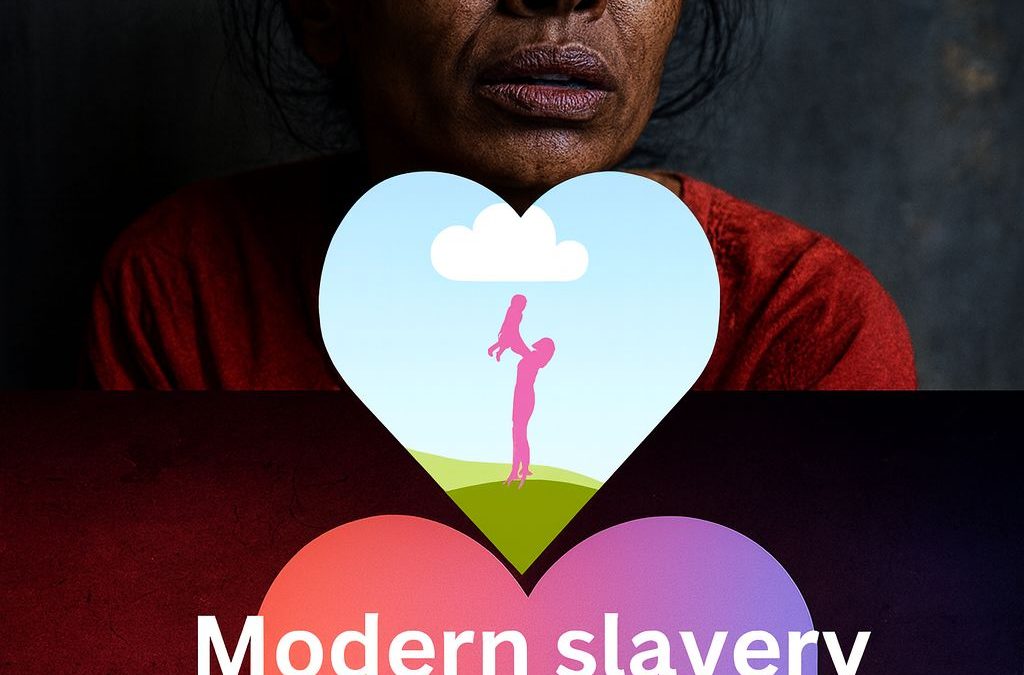
Modern slavery is not a metaphor; it is a statistical and economic reality that today exceeds, in scale and structure, the slavery of previous eras. What once relied on chains, markets and physical ownership now takes the form of fragmented supply chains, digital platforms, cross-border subcontracting and invisible labour markets embedded at the heart of the global economy.
According to the latest consolidated estimates, 50 million people were living in situations of modern slavery in 2021, including 27.6 million in forced labour (IOM global report).
It is a number that shatters all mental reference points: the world has never counted so many human beings deprived of dignity, autonomy and freedom.
The economic dimension is equally staggering. The International Labour Organization estimates that forced labour generates USD 236 billion in illegal profits every year, a 37% increase since 2014, a rise entirely attributable to the globalisation of supply chains, intensified price pressure and the expansion of informal labour markets. Forced labour is not accidental: it is profitable, predictable and structurally integrated into the contemporary economy.
Within the European Union, the situation is no exception. European institutions identified 10,793 victims of trafficking in 2023, the highest figure recorded since systematic monitoring began in 2008. But all expert bodies warn that identified victims represent only a fraction of real exploitation, as most cases remain hidden and buried in agriculture, construction, domestic work, illegal subcontracting, hospitality, and in the digital underworld of coerced sexual exploitation.
Why say that today’s slavery “exceeds” the slavery of previous centuries?
This statement is not rhetorical; it rests on three observable, measurable evolutions:
1. Industrial scale and profitability
Modern exploitation is organised, diversified and financially structured. It produces hundreds of billions of dollars annually. These amounts were unimaginable in pre-modern slave economies.
2. Deep integration into global supply chains
Unlike past slavery, which was geographically identifiable, contemporary exploitation is embedded in our clothes, technology, food, logistics and digital consumption. The longer the supply chain, the weaker the accountability.
3. Social invisibility
Today, exploitation hides behind legality: a subcontract from a subcontractor, a temporary contract, a false promise of employment, an irregular migration status. Slavery has become a system, not a scene.
The roots of the crisis: poverty, precarity, discrimination, impunity
Reports from ILO, UNODC and the European Commission converge on the same multi-factor explanation:
- poverty and economic marginalisation,
- gender inequality (women and girls are disproportionately represented among victims of sexual exploitation and forced domestic work),
- irregular migration routes,
- lack of civil documentation,
- weak labour protections,
- conflict and climate displacement,
- high profitability and low legal risk for perpetrators,
- structural failures in victim identification and access to justice.
Modern slavery grows in the blind spots of globalisation, wherever human beings become economically invisible.
Overconsumption and toxic marketing: cultural engines of exploitation
Behind the brutality of the numbers lies another, deeper mechanism. The current economic model maintains itself through:
- permanent novelty,
- artificially generated desire,
- ultra-fast logistics,
- price wars,
- and the psychological conditioning of consumers.
When a society becomes addicted to “cheap, fast, convenient”, the hidden cost is inevitably human.
The violence of supply chains is the mirror of our habits of consumption.
Toxic marketing instils an idea of perpetual need, feeding an economy where the human being at the very bottom becomes an expendable variable. When desire is industrially produced, exploitation becomes statistically inevitable.
Existing mechanisms: progress, but insufficient
Several frameworks already exist:
- ILO conventions and UN protocols, which define universal standards against forced labour.
- The Global Estimates on Modern Slavery, delivered by ILO–Walk Free–IOM, which provide the quantitative backbone of global monitoring.
- The UNODC Global Report on Trafficking in Persons, analysing trends and criminal patterns.
- Eurostat data and European Commission reports, which give a precise picture of exploitation within the EU.
- The EU Anti-Trafficking Directive and the EU Strategy on Combatting Trafficking in Human Beings (2021–2025).
- And, since 2024, the Corporate Sustainability Due Diligence Directive (CSDDD), which obliges companies to identify, prevent and remedy human-rights abuses in their supply chains.
These tools constitute an unprecedented legal arsenal. But in practice, three obstacles persist: under-identification of victims, fragile reintegration systems, and structural opacity in multi-layered supply chains.
What can be done
Based exclusively on the conclusions of international bodies:
1. Strengthen and enforce mandatory due diligence (CSDDD)
It must not remain symbolic. Its implementation must include audits, sanctions and accessible remedies.
2. Impose full supply-chain transparency
Traceability, public reporting, shared databases as opacity is the primary ally of exploitation.
3. Expand social protections to reduce vulnerabilities
Civil registration, access to legal status, social benefits, safe migration pathways: invisibility is the root of exploitation.
4. Target the financial flows of forced labour
Confiscation, anti-money-laundering mechanisms, cross-border financial investigations.
5. Regulate deceptive marketing
Greenwashing, ethical-washing and false sustainability claims perpetuate demand for low-cost labour.
6. Strengthen survivor-centred, gender-responsive support systems
Shelters, legal assistance, psychological care, long-term reintegration, especially for women and girls.
Forecasts: a trajectory that alarms experts
ILO and UNODC data indicate a worrying trend: global modern slavery is increasing.
The combination of:
- post-pandemic economic fragility,
- inflation,
- conflict and geopolitical instability,
- climate shocks,
- and growing inequalities
creates fertile ground for exploitation.
Without strong political and economic counter-incentives, modern slavery will continue to grow not as an anomaly, but as a structural outcome of the current system.
A political diagnosis: the economics of indifference
Our era is defined by a paradox. We have more data, more laws, more monitoring tools than ever before, and yet exploitation spreads.
Why?
Because the system rewards speed, low prices, high margins, and the fragmentation of responsibilities.
Slavery persists in the space between what we officially protect and what we collectively tolerate.
Conclusion : giving a human face to the global economy
To reconcile economic logic with human dignity, we must reshape incentives and rebuild meaning.
This requires:
- enforced due diligence,
- traceable supply chains,
- strong social protections,
- targeted financial action against forced labour profits,
- cultural transformation against overconsumption.
And this is where initiatives such as Women for a Sustainable World become essential.
They remind decision-makers that the battle against exploitation is not only legal or economic, but civilisational.
They call for a world where being human is not a vulnerability, and where no market advantage is ever purchased with someone else’s suffering.
Sources
- International Labour Organization (ILO) : Global Estimates of Modern Slavery: Forced Labour and Forced Marriage (2022), global headline figure: ~50 million people in modern slavery in 2021, 27.6 million in forced labour.
- ILO : Profits and Poverty: The Economics of Forced Labour (2024), illegal profits from forced labour estimated at USD 236 billion/year, 37% increase since 2014.
- Walk Free Foundation : Global Slavery Index & Global Estimates of Modern Slavery (2021/2022), statistical foundation for global slavery prevalence estimates.
- Eurostat / European Commission : EU data on trafficking: 10,793 registered victims in 2023 (EU‑wide).
- Public media sources summarizing and disseminating the ILO findings: The Business Standard reporting on ILO profits report; Al Jazeera on forced labour profits; Euronews summarizing EU trafficking statistics.
- Additional contextual sources documenting how forced labour and human trafficking remain global, systemic including lower-tier supply chain risks, migrant vulnerability, and inequality factors.